Many dog owners notice that their dog responds well to commands at home but struggles to maintain the same level of obedience in busy environments. A dog that appears fully trained indoors may become distracted by unfamiliar sights, sounds, and activity outdoors. This occurs because dogs often need structured practice in different settings to learn how to respond reliably when distractions are present. Distraction-based training helps bridge the gap between obedience in a controlled environment and dependable behavior in real-world situations.
Distraction-based training is the solution that Atlanta dog obedience programs rely on to close this gap. By systematically exposing dogs to the sights, sounds, and energy of Atlanta’s urban landscape during obedience work, trainers build reliable obedience that holds up where it matters most-on busy streets, in packed parks, and throughout everyday life. This blog explains exactly why this training method dominates dog training in Atlanta, the science that supports it, and how it transforms both the dog’s behavior and the owner’s confidence.
Distraction-based training is a structured approach to teaching dogs obedience commands while they are exposed to controlled environmental stimuli-sounds, movement, other dogs, unfamiliar people, novel surfaces, and scents. The purpose is not to overwhelm the dog but to build the dog’s attention and impulse control so that commands remain dependable regardless of context. Practicing controlled exercises, such as distraction down stays, can help dogs build patience and focus when activity is around them. One of the key benefits of dog training is that it helps dogs apply learned commands more consistently in the presence of everyday distractions.
Dogs tend to respond more reliably in familiar, low-distraction environments. For example, a dog may perform a perfect sit-stay at home but struggle to maintain focus when faced with unexpected sights, sounds, or movement outdoors. This occurs because obedience skills practiced only in quiet settings have not been reinforced under more challenging conditions. Without gradual exposure to distractions during training, dogs may find it difficult to stay attentive to commands when competing stimuli are present.
The difference between knowing a command and performing it reliably in everyday situations is significant. A well-trained dog does more than respond in a controlled environment—it follows commands when distractions are present. In Atlanta, that may mean maintaining a heel while public transit passes nearby, ignoring other dogs at a crowded festival, or responding to a recall command on a busy sidewalk. Distraction-based training helps dogs develop the focus and impulse control needed to perform consistently in real-world settings, bridging the gap between obedience at home and dependable behavior in public environments.
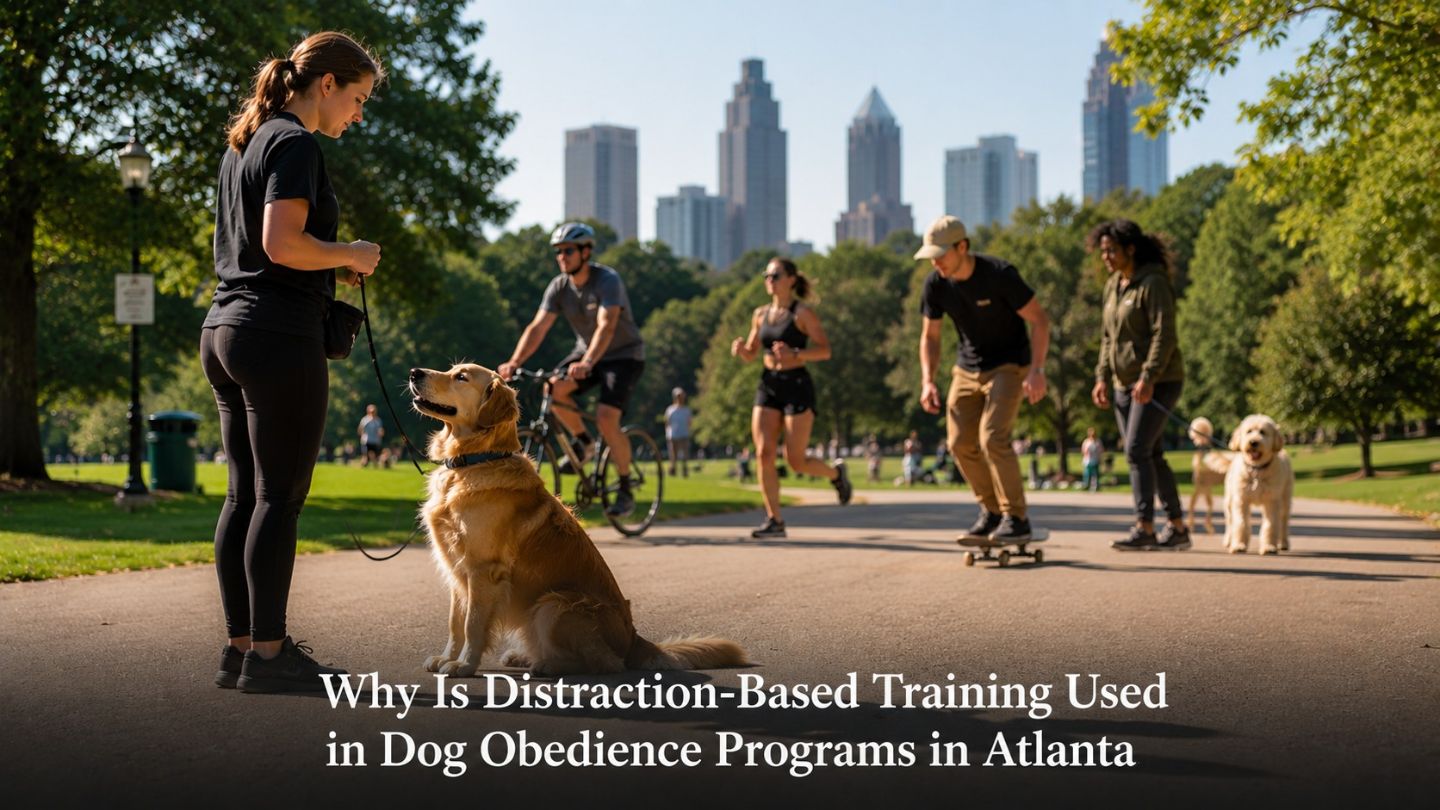
Common Atlanta distractions that demand this kind of preparation include rail and bus noise, street festivals and outdoor dining patios, cyclists on the BeltLine, other dogs at parks, joggers, skateboarders, and the sheer density of pedestrian traffic in Midtown and Buckhead.
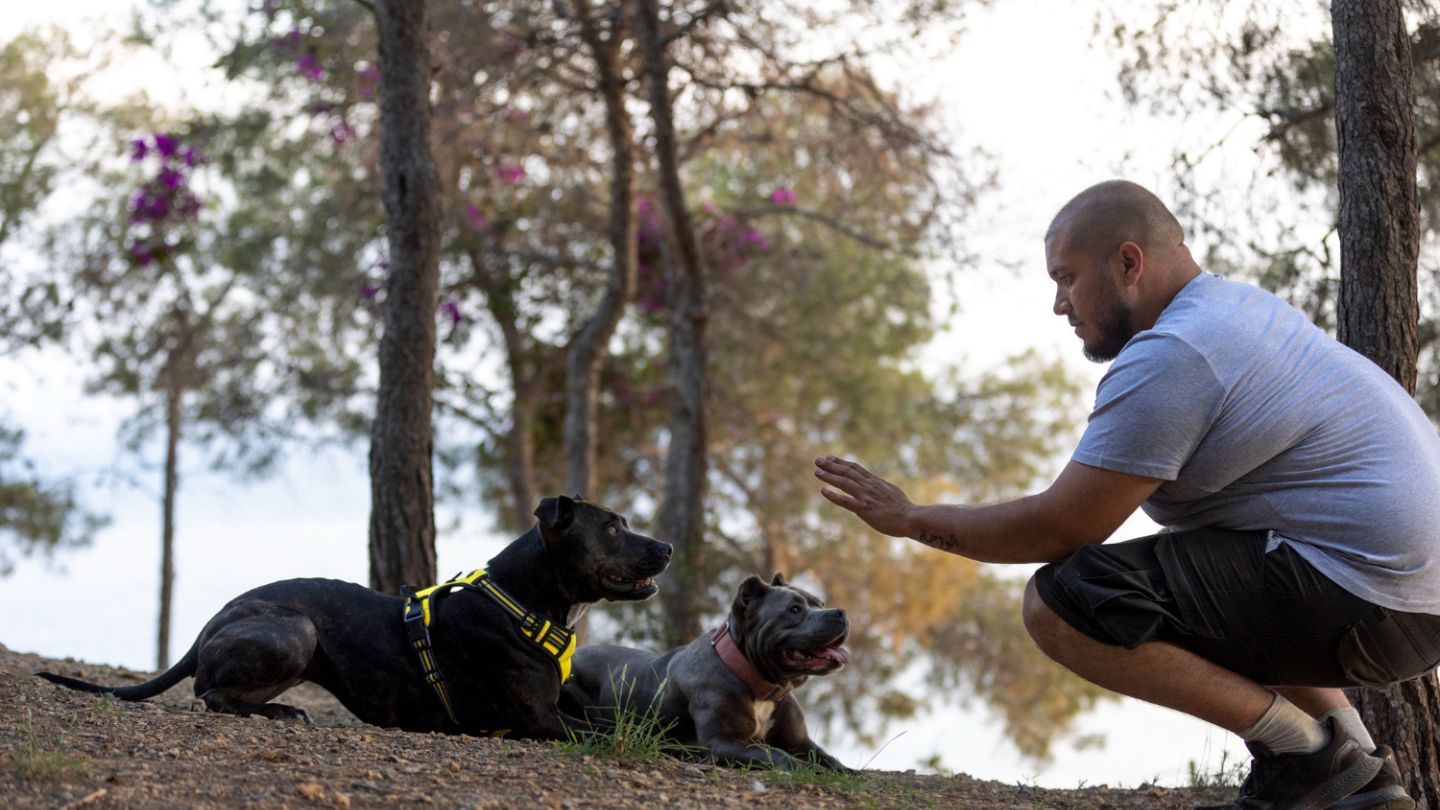
Understanding why distraction training works requires looking at how dogs’ brains process multiple stimuli. Every dog has a stimulus threshold-the level at which environmental distractions overwhelm its ability to focus on the handler. Above that threshold, learning breaks down entirely. Dogs learn to process information rather than react impulsively only when training respects this threshold and builds capacity gradually. Understanding dog psychology also helps explain why dogs need gradual exposure before they can respond calmly in distracting environments.
Research published in Applied Animal Behavior Science compared dogs trained at various intensity levels and found that dogs with more structured obedience training maintained longer gaze toward handlers and shifted attention less often, even as environmental stimulation increased. This confirms that distraction training strengthens the attention systems dogs need to perform in chaotic environments.
A separate 2023 study on auditory distractions found that dogs trained in completely silent environments initially learned tasks more efficiently. Still, dogs that were gradually exposed to distractors developed better habituation to novel stimuli over time. The practical takeaway: training should start in low-distraction settings, then progressively layer in real-world sounds and activity.
Research comparing obedience-trained, agility-trained, and scent work–trained dogs demonstrates that training type and experience directly correlate with better inhibitory control-the ability to suppress impulses to chase, investigate, or react. Impulse control is essential for dogs navigating busy urban areas like Atlanta, where a single lapse in focus near traffic can be dangerous.
Atlanta’s busy environment creates constant distractions that many dogs do not encounter in basic obedience classes held in quiet, controlled settings. From high-traffic streets and active neighborhoods to parks, festivals, and public spaces, the city presents real-world challenges that indoor-only training often cannot fully prepare dogs to handle.
Consider the stakes: a dog that doesn’t maintain a solid heel while crossing a busy intersection poses a genuine safety risk. A pet that lunges at passing cyclists on the BeltLine creates liability and stress for its owner. Training in urban settings helps prevent behaviors like lunging or chasing by giving dogs repeated, managed practice filtering exactly those stimuli. Training in real-world scenarios improves dog obedience because dogs learn best in their natural environment.
Atlanta’s weather and seasonality add another dimension. Hot summers push dog training experience into early mornings or evenings, while seasonal tourism and festival peaks dramatically increase distraction levels in public spaces. Trainers across the Atlanta metro area must adapt programming to account for these fluctuations, ensuring dogs experience varying intensities across conditions.
Many owners fall into predictable traps when attempting distraction training on their own. For dogs that react strongly to unfamiliar people, other dogs, or movement, structured aggressive dog training tips can help promote safer behavior when paired with professional guidance. The most frequent errors include:
These mistakes create what trainers call the “obedience gap”: a dog that performs brilliantly in class but falls apart during daily life, leading to owner frustration and the mistaken belief that the dog won’t listen.

The core benefit is just what every Atlanta dog owner wants: a dog that listens, whether you’re in the backyard, walking through Midtown, or sitting at an outdoor café. Distraction-based training helps dogs obey commands amidst real-world distractions by building response reliability across multiple contexts. Commands like come, stay, and heel become genuinely dependable because they’ve been practiced and reinforced where they actually need to work. This is the huge difference between a dog that knows a command and one that performs it.
Training reduces reactivity to passing distractions, such as cars and pedestrians, which directly translates into safer outings. Whether you’re crossing Peachtree Street, navigating the BeltLine, or managing your pet near a busy playground, distraction training improves the reliability of commands in high-stimulation environments. For service dog candidates, this isn’t optional-commands must function flawlessly in public, varied environments. Dogs that struggle with leash aggression especially benefit from controlled exposure that teaches them to stay focused near people, pets, and traffic.
Distraction-based training enhances the bond between dog and owner. As both the dog and handler learn to communicate under pressure, trust deepens. Training focuses on building a deeper relationship between the dog and the owner, not just on mechanical compliance. Dog owners who complete distraction-focused programs consistently report feeling more confident navigating Atlanta’s diverse neighborhoods and events. They feel confident taking their pet to restaurants, stores, and crowded parks without anxiety. In many ways, the patience, consistency, and communication used in successful dog training are similar to the qualities often seen in outstanding parenting and excellent dog training.
Dogs that have experienced structured exposure to a variety of stimuli develop better socialization skills and calmer temperaments. Distraction training helps dogs remain calm in chaotic environments because repeated, positive exposure produces habituation rather than sensitization. Gradual exposure to stimuli helps manage anxious or impulsive behaviors in dogs, which is especially important, given that over 90% of trained dogs are rescues needing real-world skills. Mental enrichment through distraction training supports a dog’s well-being and produces a more balanced, content pet. Activities such as agility training may also support confidence, coordination, and mental enrichment for dogs learning to manage new challenges.
Dogs trained with positive reinforcement in distraction-rich settings show stronger long-term retention. Positive reinforcement methods are critical for dog training in chaotic environments because they build intrinsic motivation. Dogs trained with positive reinforcement are more eager to please and show longer-lasting results. Positive reinforcement encourages dogs to repeat desired behaviors, while punishment-based training can damage the dog-owner relationship and produce less durable compliance under stress.
Commands practiced under distraction resist the regression that commonly occurs when dogs age, move to a new home, or encounter unfamiliar situations. This behavioral stability makes a huge difference in the long-term quality of life for both the dog and the owner.
Distraction-based training plays an important role in helping dogs respond reliably in everyday situations. By gradually introducing real-world distractions during obedience work, dogs learn to maintain focus, follow commands consistently, and navigate busy environments with greater confidence. This approach helps bridge the gap between obedience practiced in controlled settings and dependable behavior in public spaces, leading to improved safety, better socialization, and stronger communication between dogs and their owners.
At Comprehensive Pet Therapy, our evidence-based approach to dog obedience training in Atlanta is designed to help dogs succeed in real-life situations, not just during training sessions. Using positive reinforcement methods and proven training techniques, we create customized programs that build lasting obedience, strengthen the human-animal bond, and support long-term behavioral success. Whether you are interested in service dog training, a structured growl class, a foundational puppy class, help with dog housebreaking, or solutions for excessive barking, our team provides personalized programs tailored to each dog’s unique needs. Ready to help your dog develop reliable obedience in any environment? Contact us today to get started.
Training should start as early as 8 weeks old. During the critical socialization window (roughly 8–16 weeks), puppies are most receptive to new experiences. Puppy training at this stage focuses on gentle, positive exposure to soft stimuli-household sounds, new surfaces, polite greetings with people-before progressing to busier Atlanta environments. Starting early gives puppy owners the best foundation for lasting good behavior.
Training length varies by issue severity and dog age. Most dogs show improved reliability in mild distractions within four to eight weeks of consistent work. Strong performance in high-distraction environments, like busy Atlanta parks or crowded sidewalks, typically requires three to six months of dedicated practice. Rescue dogs or those with anxiety may need additional time for gradual exposure before distractions are formally introduced.
Absolutely. Leash pulling is often triggered by environmental distractions that the dog hasn’t learned to manage. Distraction training directly addresses this by teaching the dog to maintain focus on the handler’s cues despite competing stimuli. Combined with structured loose-leash walking practice, distraction training transforms leash manners from a constant struggle into reliable, calm walking-even on Atlanta’s busiest streets.
Yes, and it plays a critical role in their rehabilitation. Over 90% of the trained dogs are rescues that need real-world skills. For anxious or reactive dogs, calm psychology is used to rehabilitate aggressive dogs, and distraction exposure is carefully graduated to remain well below the dog’s stress threshold. Positive reinforcement builds trust between dogs and owners, and gradual exposure to stimuli helps manage anxious or impulsive behaviors. The goal is to build confidence, not to flood the dog with overwhelming experiences.
Atlanta’s hot summers, afternoon thunderstorms, and variable seasonal conditions require adaptive scheduling. Trainers often shift to early-morning or evening sessions during peak-heat months and use indoor environments (pet-friendly stores, training facilities) when outdoor conditions are unsafe. Seasonal events and tourism peaks also change distraction intensity at popular locations, which experienced trainers use strategically to train during quieter periods first, then graduate to high-traffic festival weekends as the dog’s skills develop.

Need to get in touch with CPT? I’ve got you covered.
Pick what works best for you!