Picture this: your new puppy locks onto a squirrel along a Greenway trail, and suddenly you’re being towed down the path, wishing you had addressed leash manners weeks ago. The good news is that intentional puppy training in Alpharetta can prevent leash pulling before it ever becomes a habit. When you teach loose leash walking early-before your puppy discovers that pulling on the leash actually works-you save yourself months of frustration and build a foundation for calm, enjoyable daily walks.
This article covers why puppies start pulling, the core skills that stop it from developing, practical exercises you can use on every walk, common mistakes to avoid, and how Alpharetta’s own neighborhoods, parks, and trails become your best training classrooms.
Understanding the “why” behind pulling makes it far easier to stop leash pulling before the habit takes root.
Most dogs pull to explore new scents and sights. Dogs learn about the world primarily through their sense of smell, so every bush, fire hydrant, and patch of grass is a magnet for forward momentum. Dogs naturally walk faster than humans, leading to pulling even when a puppy has no intention of misbehaving. Add in the desire to greet every person and dog on the sidewalk, attraction to movement like joggers or bicycles, and heightened curiosity about wildlife, and you have a recipe for constant leash pressure.
In Alpharetta, everyday walks expose puppies to busy sidewalks, neighborhood kids on scooters, squirrels darting across paths, and traffic noise-all of which create high excitement and drive a puppy forward. Increased indoor time leads to pent-up energy and excitement, which means that the moment a puppy hits the front yard or sidewalk, that energy explodes into pulling on the leash.
Here is the critical piece most dog owners miss: pulling is often reinforced when dogs move forward despite tension. Every time you keep moving forward while the leash is tight, your puppy accidentally learns that dragging you works. Owner tension on the leash can also cause dogs to pull more, creating a tug-of-war cycle that feels impossible to break once it is established.
Puppies repeat what works and drop what does not-this simple principle drives every leash habit they develop. Dogs learn leash pulling by occasionally getting what they want, even if pulling only succeeds some of the time. That intermittent success makes the behavior remarkably sticky. The same timing and consistency help shape other early behaviors, including how to stop puppy biting.
Even very short potty walks in the yard or on the sidewalk teach long-term leash patterns. What your puppy learns during those early outings around neighborhood sidewalks or local trails quickly turns into ingrained behavior if not guided. Over-arousal when encountering distractions leads to leash pulling in puppies, and once a puppy has rehearsed that pattern for weeks, trying to overwrite it once the dog is larger and stronger becomes a much bigger project. Prevention is always easier than correction, which is why starting early makes more sense for every owner.
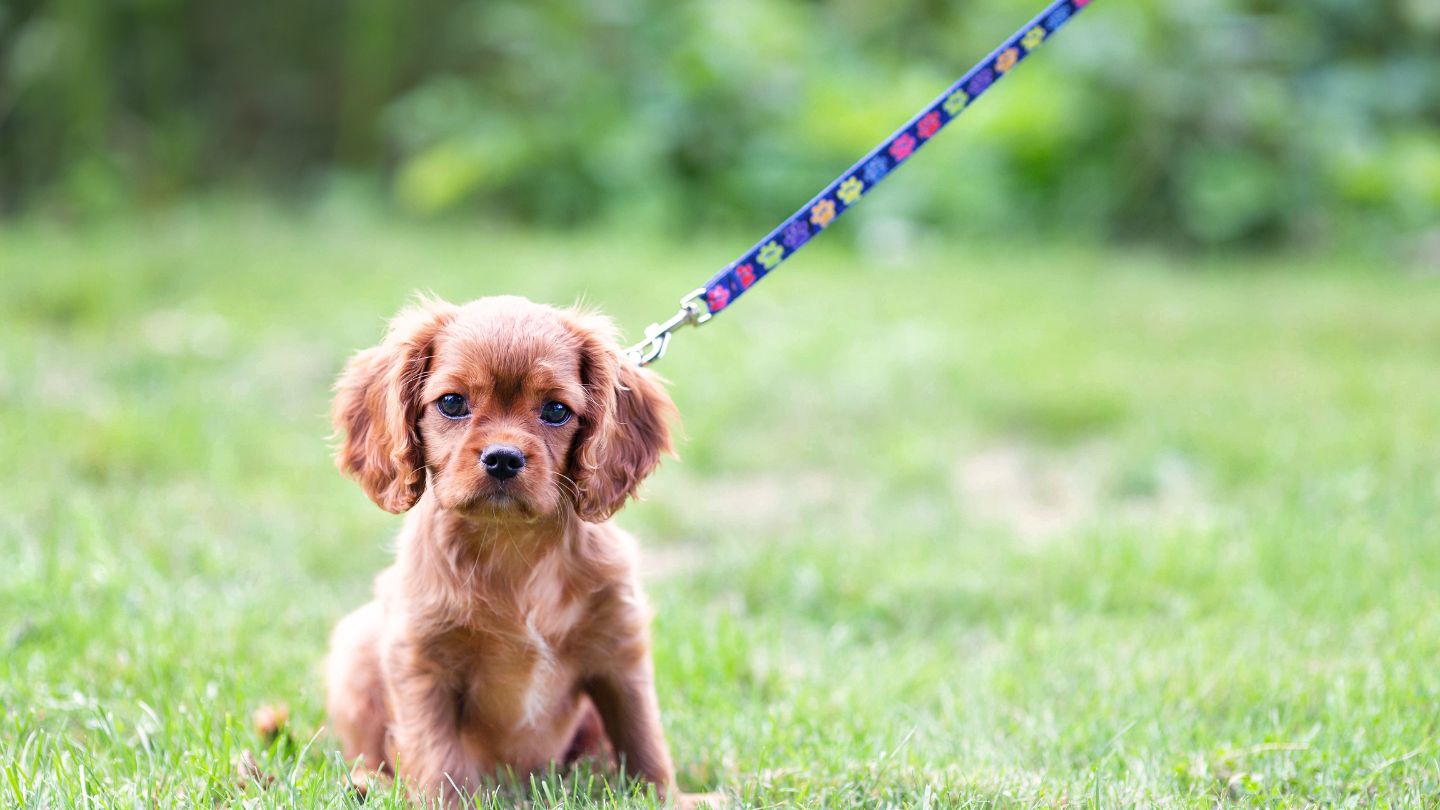
Prevention begins indoors or in another quiet setting, where your puppy can learn the rules without competing distractions. Once your puppy can stay engaged, gradually practice outdoors and build toward busier Alpharetta streets.
Early puppy training focuses on engagement, impulse control, and foundational mechanics. The key foundation concepts include teaching your puppy to stay engaged with you as the handler, using marker signals to communicate the exact moment the puppy does the right thing, placing rewards where you want the puppy to be, and building calm starts to every walk. These skills are woven into every training session rather than treated as a separate “leash lesson” that only happens outside.
Teaching focus and engagement is critical for training puppies to ignore distractions. Loose-leash walking builds on other foundations, including the five essential skills to teach your new puppy. Here are the foundational skills that make the biggest difference:
Practical Puppy Exercises To Encourage Loose Leash Walking
These are simple, daily practices Alpharetta owners can use on every walk to teach loose leash walking before pulling becomes a pattern. Training should start in low-distraction environments for success-your yard, a quiet cul-de-sac, or an empty parking lot-before progressing to busier local areas.
Short training sessions are recommended for maintaining engagement and focus in puppies. Keep sessions upbeat and stop while your puppy is still interested and doing well, fitting leash work naturally into normal potty and play breaks.
Follow Me Game: Take a few steps in any direction and reward your puppy the instant they move toward you. Gradually increase the distance and add gentle turns. This game builds your puppy’s awareness that staying connected with you is fun and rewarding. Using high-value treats can significantly improve puppy engagement during training.
Stop and Reset (The “Red Light, Green Light” Game) The “red light, green light” game teaches loose-leash walking in a straightforward way. As soon as the leash tightens, stop walking completely. Stand still and wait for your puppy to offer slack or glance back at you. The moment the leash relaxes, mark the behavior and start walking again. This teaches the puppy that tension causes everything to pause, while a loose leash means they get to keep moving forward.
Zigzag and U‑Turn Game: Changing direction abruptly when a puppy pulls helps teach attention to the handler’s movements. When your puppy surges ahead, simply change directions. Turning and walking the other way helps redirect pulling dogs by making forward progress depend on following you. Reward the puppy each time the dog turns and catches up. This makes pulling counterproductive because the puppy never reaches what they were aiming for by dragging you.
Check‑In Walks: Take short, structured walks along a quiet sidewalk where the goal is frequent eye contact and engagement rather than distance covered. Keep these walks focused on quality over mileage, rewarding your puppy for checking in with you.
Many dog owners unintentionally reward pulling, especially with energetic puppies who are excited about everything. This is not about blame-it is about recognizing and replacing unhelpful habits so you can stop dogs from practicing the wrong behavior.
Local settings can become excellent training classrooms when you approach them thoughtfully and match the level of distraction to your puppy’s current skill level.
Start with easier locations: quiet residential neighborhoods during early morning hours, open green spaces with room to move, and less trafficked stretches of trail. These allow your puppy to practice leash manners without being overwhelmed. Then gradually introduce more distractions- busier sidewalks, outdoor shopping areas, dog-friendly patios, and weekend events. The key is to pick the timing and distance so your puppy can succeed, building confidence with each session.
Real trigger situations like joggers, strollers, bicycles, and wildlife should be introduced at a distance where your puppy can notice them without becoming distracted beyond recovery. As your puppy learns to walk calmly past mild distractions, you can close the distance. Training builds the neurological “brakes” a puppy needs to resist urges to lunge, and these brakes strengthen every time your puppy chooses to check in with you instead of chasing a trigger.
How Local Puppy Training Support Reinforces Loose Leash Manners
Structured puppy programs in Alpharetta give owners a clear roadmap to prevent pulling by combining education, supervised practice, and accountability. Professional guidance focuses on teaching both the dog and the owner: handling skills, timing of rewards, reading body language, and understanding why each exercise works.
Group classes provide socialization opportunities that reduce pulling behavior in puppies by giving them safe, supervised exposure to other dogs and people while practicing leash manners in a controlled setting. A tired dog learns more easily during walks, and group sessions offer a productive outlet for energy alongside structured learning.
One-on-one coaching allows customized plans for puppies who are shy, high-energy, or easily overstimulated. A skilled dog trainer can observe your specific neighborhood layout, identify the distractions your puppy encounters most, and tailor exercises that address those exact challenges. Puppy training should clarify the consequences of pulling and reinforce positive behaviors in a way that makes sense for your individual puppy. For puppies who feel uneasy around new places or unfamiliar dogs, private in-home dog training lessons for a nervous puppy can offer a more familiar setting for practice.
Consistent practice at home between sessions is where long-term habits are built. Trainers who explain the “why” behind each exercise give owners the understanding they need to follow through on their own.
Building A Long‑Term Loose Leash Routine As Your Puppy Grows
Preventing pulling is not a one-day achievement but an ongoing routine as your puppy matures. Dogs of any age can learn new behaviors with consistent training, and the skills you build now continue to develop as your puppy encounters new challenges. A predictable home schedule can support leash practice too, and housebreaking a dog or puppy is another routine owners often build during early training.
Gradually increase walk length, challenge level, and environments while maintaining the same clear rules. Mix “training walks” focused on specific skills with more relaxed, sniff-friendly outings where the leash stays loose but your puppy gets to explore. Letting your puppy sniff and investigate on a loose leash is a powerful reward that keeps the walk fun for both of you.
Even as your dog becomes more experienced and confident, continue using engagement games, check-ins, and direction changes to keep leash manners sharp. Older dogs benefit from refreshers just as much as puppies do-most dogs respond well when the expectations stay consistent, and the rewards stay meaningful.
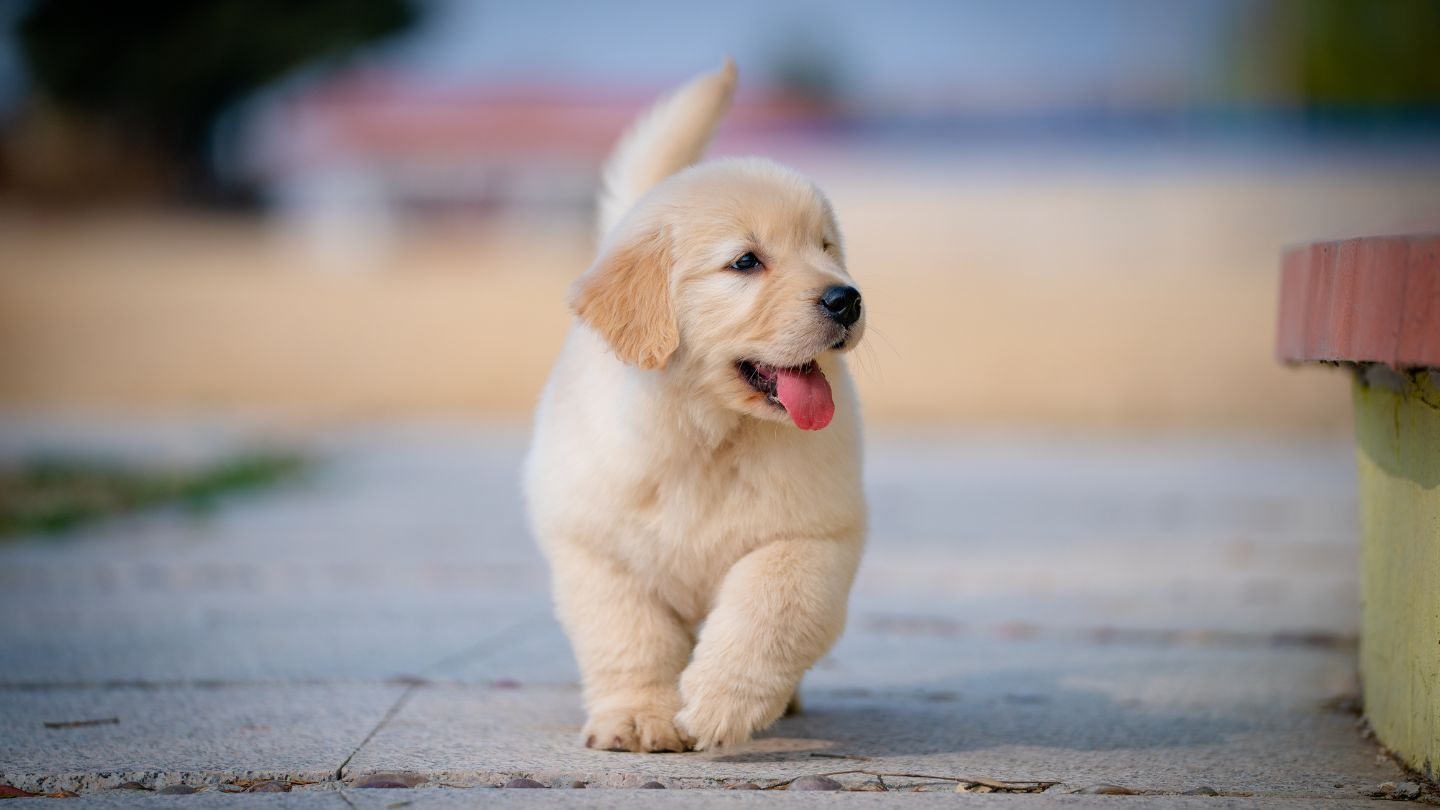
Loose-leash walking develops through small, consistent lessons: reward your puppy for checking in, pause when the leash tightens, and add distractions gradually. Begin in quiet spaces, then practice on familiar Alpharetta routes so calm walking becomes part of daily outings.
Comprehensive Pet Therapy (CPT) offers puppy training in Alpharetta to help families build these habits. For dogs who need individualized guidance at home, in-home private instruction can address leash skills in familiar surroundings. If concerns extend beyond walks, CPT’s Growl Class supports work on aggressive responses, while its service dog training prepares eligible dogs for assistance tasks. Owners can also seek help with excessive barking as another behavior concern. Contact us to discuss which approach suits your dog and your training goals.
Begin when your puppy comes home, first helping them feel comfortable wearing a collar or harness and a light leash indoors. Keep early practice brief and positive. Once your puppy is ready and local rules allow, introduce calm outdoor walks and gradually add distractions. Puppies start learning as soon as they come home, so their first leash experiences can help shape calm walking habits.
Keep practice short enough that your puppy stays interested and can succeed. A few minutes during a potty break or playtime is often easier to manage than one long session. End on a positive moment, then repeat later rather than continuing when your puppy is tired or frustrated.
Choose comfortable, well-fitted equipment that lets you guide your puppy without pulling or causing strain. A standard leash paired with a flat collar or suitable harness is a simple starting point. Check the fit as your puppy grows, and ask a trainer for help if equipment choices are unclear.
Yes. Return to short practice in quiet places and reward slack-leash walking before adding distractions. When the leash tightens, pause and resume when your puppy reconnects or creates slack. Consistent practice can change the pattern, even if pulling has already become a habit.
Let your puppy approach only while the leash stays loose. Ask for a calm check-in or brief sit, then allow a short greeting if the other person and dog are comfortable. If your puppy pulls, create space and try again when they settle. This makes calm behavior the way to earn greetings.

Need to get in touch with CPT? I’ve got you covered.
Pick what works best for you!


