Housebreaking is one of the first and most important challenges dog owners face, and it can feel overwhelming without a clear plan. Breaking down the housebreaking process into simple, realistic steps that work for puppies and adult dogs will aid the learning process for you and your dog. You will learn how routines, supervision, timing, and reinforcement shape reliable bathroom habits, while avoiding common mistakes that slow progress. With the proper structure, housebreaking becomes manageable, predictable, and far less stressful for both dogs and their owners.
Housebreaking is an essential skill for a pet dog residing indoors with humans. Whether you are bringing home an 8-week-old puppy or welcoming a 3-year-old rescue, establishing reliable housebreaking is imperative for maximizing the joy you receive from your new friend.
Beyond the obvious benefit of protecting your floor, furniture, or rental deposit, house training prevents the maladorous scent of lingering urine. Once urine seeps into carpet padding, hardwood, or grout, you may have difficulty abolishing airborne odor. Moreover, residual odor may encourage your dog to continue urinating atop the same indoor spots. Therefore, successful housebreaking creates a more pleasant house, both figuratively and literally.
Successful housebreaking builds trust between you and your dog. Your dog learns that urinating and defecating in the right place earns praise, treats, and increased freedom. Concurrently, you learn to better interpret your dog’s signals and to respond appropriately. Improved mutual expressive and receptive communication enhances your animal-human bond and improves all training you may conduct with your dog, including obedience and general household manners, as we elaborate in how to stop inappropriate dog chewing behavior.
Furthermore, consistent habits support bigger goals down the road, such as visiting friends’ homes or staying in pet-friendly hotels. A housebroken dog is likely to be a welcomed guest wherever you visit.
To maximize housebreaking prowess, your dog should learn to exhibit appropriate housebreaking behavior amidst multiple indoor environments and amongst a stimulating environment containing multiple dogs. Therefore, we recommend enrollment in a CPT Puppy Class or Beginner Obedience Class. Group class improves general socialization and obedience, while testing housebreaking skills in a challenging environment.
Before you bring your puppy home or start training your adult rescue dog, decide on your long-term goal. Will you train for strictly outdoor urinating, indoor pads, or a hybrid approach? Making this choice upfront prevents confusion later.
CPT typically prefers the outdoor plan. Nevertheless, we have had clients who live in urban high rise buildings and physically disabled clients, where taking a dog outside is physically or logistically difficult. Similarly, we have had clients who spend the summer on houseboats, where taking a dog to a solid, natural outdoor surface is impossible, other than when they are docked. In addition, senior dogs who have difficulty with mobility, cognitive function, or urinary/fecal continence may do better with an indoor or hybrid plan. Therefore, we offer multiple plans, so that we account for all contingencies.
This is the recommended approach for the vast majority of clients, especially if the person has a yard or easy outdoor access. If you are a fit for the outdoor plan, the process involves taking your dog on-leash to the same spot every time, until your dog intrinsically directs itself to the desired location. CPT suggests using a non-grass natural surface, such as pine straw or pine bark mulch. The urinary spot should be the mulch location closest to the exit door transitioning your dog from the indoors to the yard, which is usually a kitchen or patio door. The fecal location should be in the periphery of the outdoor area, especially the back corner of your yard. Mandating consistency during early on-leash stages, expedites your dog forming a strong preference for the specific spot.
When applying the indoor plan, you can use newspaper, real-grass trays, artificial grass trays, a litter box, or commercially purchased “pee pads.” The key is keeping the paper/tray/box/pad in one fixed location, preferably a non-carpeted location, so that a miss is easier to clean and is less likely to leave a lasting odor. CPT recommends a bathroom or laundry room. For those residing in high-rise apartments or condominiums and having a deck, you can construct a dog door to the deck and then place the paper/tray/box/pad atop the deck surface. To maintain hygiene and minimize odor, frequently clean trays and boxes and replace papers and pads.
A hybrid plan combining indoor and outdoor training can be functional for a person residing in a high-rise dwelling, who uses indoor elimination when walking the dog is impractical and outdoor elimination during outdoor walks. Likewise, a person residing on a houseboat during the summer may prefer an indoor plan while on the boat and an outdoor plan when docked or when outside the boating season.
To minimize confusion that can occur with a hybrid plan, it is important to maintain consistency with contexts. We wish a hybrid plan dog to know that we prefer outdoor elimination in appropriate outdoor contexts, such as familiar areas or areas containing familiar mulch surfaces, and indoor elimination in areas providing an appropriate context, such as a pad, tray, or litterbox. Thus, a hybrid plan dog also needs to learn that elimination outdoors or indoors is disallowed other than on the designated surface. To effectively minimize confusion and maximize learning and consistency, read things you may not know about dog psychology.
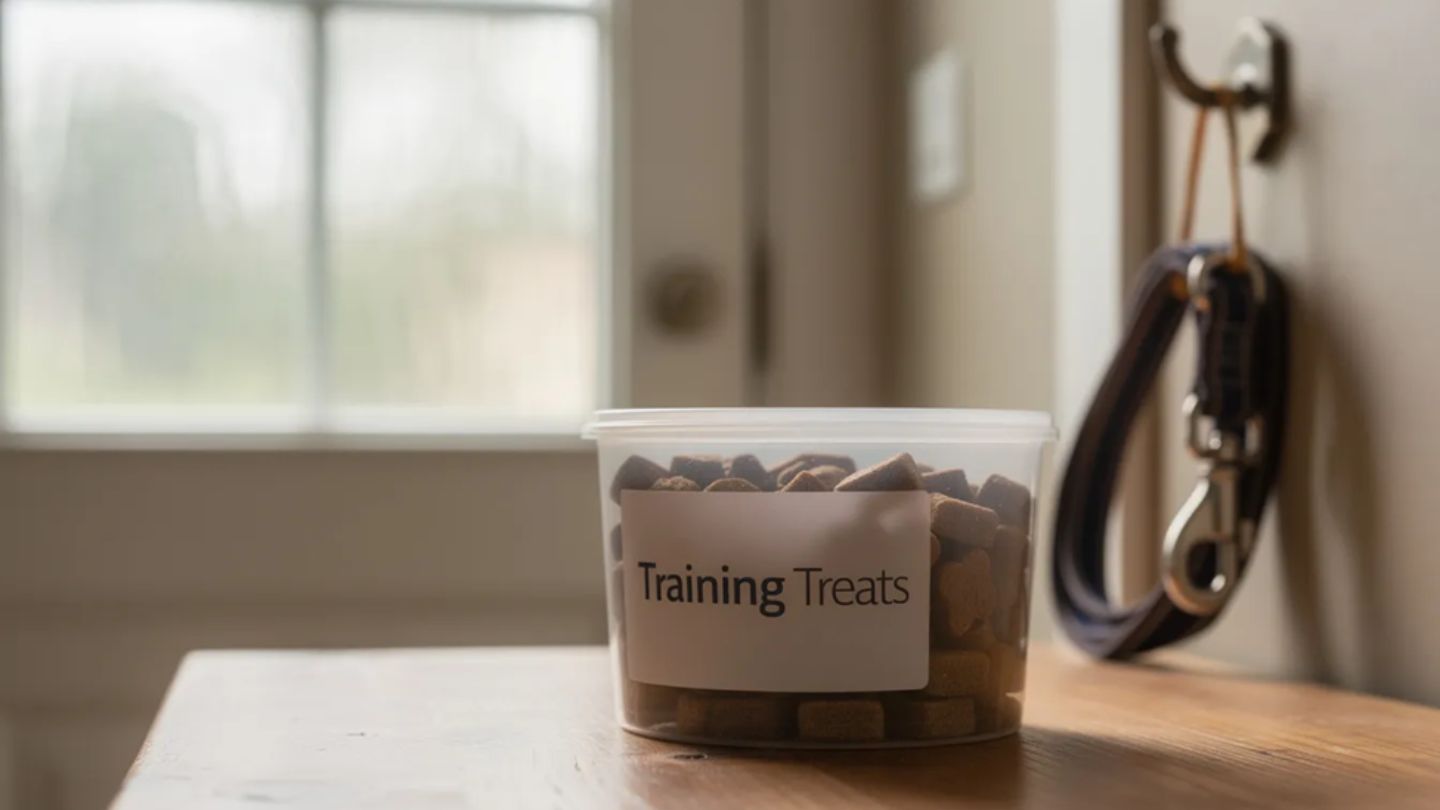
Prepare for the arrival of your new puppy or rescue dog by purchasing the following supplies. Preparation reduces error and maximizes the probability of success.
| Supply | Purpose |
| Properly sized crate | Provides a secure den area, while allowing your dog to stand, turn, and lie down, but not pace or segregate one end as a bathroom |
| 4 – 6 foot leash | Assists in guiding your dog to the ideal urinary/fecal spot and keeps your dog focused, until he/she progresses to the spot independently and promptly urinates upon receiving time outdoors |
| Secure collar or harness | Safe, comfortable, and effective apparatus to attach the leash while you lead your dog outside |
| Enzyme-based cleaner | Fully removes scent from accidents by decomposing dog urine and feces into inert substances |
| Timer or phone reminders | Keeps your schedule reliable during busy days |
Optional- depending upon the size and floorplan of your home and whether you choose an indoor, outdoor, or hybrid plan:
Crate training taps into your dog’s natural denning instinct to keep his/her sleeping and earing area clean. When used correctly, a crate prevents accidents and helps your pup develop bladder and bowel control.
Your dog’s crate should be roomy enough for your dog to stand, turn around, and lie down comfortably, but not so large that he/she can sleep in one corner and urinate in the other. For growing puppies, many crates come with temporary dividers you can adjust as your pet physically and behaviorally matures.
Never use the crate as punishment. Instead, create pleasant associations. Ideally, your dog should consider his/her crate a comfortable, secure, private area, like a child would consider his/her bedroom.
During daytime hours, puppies can hold urine for roughly one hour per month of age. Therefore, to maximize the probability of rapid success, you should implement age-appropriate toileting schedules.
When releasing your puppy or dog from his/her crate, first insist your dog remains calm. We prefer that your pet sit of his/her own volition or on-command. Then, calmly apply a leash to your dog’s collar. Once applying the leash, release your dog from the crate and/or crate area, walk together through the exit door, then proceed directly to the urination spot. Toileting time always precedes playtime. Your dog has a job task he must complete- urination- to subsequently earn playtime.
CPT trainers frequently tailor housebreaking schedules and strategies during in-home private instruction. In-home are highly customized. By observing your home’s floorplan, floor surfaces, exit areas, and outdoor areas and your dog’s interaction with the environment, a CPT Trainer can effectively design your dog’s housebreaking plan.
Some dogs, especially those with diseases or conditions affecting the urinary system (kidneys, ureters, bladder, urethra), pancreas, or adrenal glands; dogs who develop learned helplessness from protracted confinement, such as pet store dogs; or dogs brought up in unhygienic, soiled environments may lose their natural reluctance to urinate or defecate where they eat or sleep. If your dog’s housebreaking progress and adaptation to crating is inhibited by health or historical reasons, exercise extra patience and implement frequent toileting trips, with short confinement intervals between toileting opportunities. Concurrently, schedule an appointment with your veterinarian to treat underlying medical causes. By resolving associated health problems and reindoctrinating the crate as a clean, hospitable, secure environment, we can convert the crate into a productive housebreaking training tool.
Successful housebreaking requires a regular daily schedule that matches your dog’s natural tendencies for urination and defecation. Predictability in scheduling helps your dog anticipate when relief is coming and limits accidents. Set your dog up for success and you will observe rapid housebreaking progress. Establishing and reinforcing appropriate habits through positive reinforcement is the key to successful dog training.
| Time | Activity |
| 6:00 –7:00 AM | Wake up → immediately outside to urination spot |
| After breakfast | Wait 5 – 15 minutes, then outside |
| Mid-morning | After a nap or play session, outside |
| After lunch | Wait 5 – 15 minutes, then outside |
| Afternoon | After each nap or play session, outside |
| After dinner | Wait 5 – 15 minutes, then outside |
| Before bed | Final urination trip |
Puppies generally need to go:
When taking your dog outside, use a consistent cue phrase like “go pee” or “go poo” in a calm, neutral tone. Say the command one time. Communicate the command when your dog’s behavior indicates urination or defecation is imminent. For instance, circling, sniffing, spreading legs, squatting, or lifting a leg are behaviors that often precede urination or defecation. Soon, your dog will understand the phrase means it’s OK to urinate or defecate, which will be beneficial when traveling and using unfamiliar toileting locations.
If you are bringing home an adult rescue dog, implement a similar plan to the typical puppy plan, except intervals can be slightly longer. Start with frequent trips outside, every 3 – 4 hours. Within a few days, you should understand your dog’s natural excretory rhythms and preferences. Again, set your dog up for success. You are better making things easy initially than cleaning accidents.
Pro tip: Track urination times and locations in a notebook or phone app for the first two weeks. Then, identify patterns that help you fine-tune the schedule.
Consistent mealtimes and water access create reliable and predictable urination and defecation times.
Feed an age, breed, and activity appropriate food that your dog enjoys and digests well. Keep your dog on the same food brand and formula unless there is a definitive rationale for change, such as health reasons, allergies, or weight management. Sudden dietary change may cause gastric distress and diarrhea, which inhibit housebreaking success.
Keep fresh water available throughout the day. With young puppies, to facilitate uninterrupted nighttime sleep, avert nocturnal accidents, and prevent early awakening, pick up the water bowl 1 – 2 hours before bedtime.
Loose stools from illness, food poisoning, allergies, food intolerance, or parasites complicates housebreaking success. If you detect a potential health abnormality, take detailed notes about your dog’s fecal behavior and other relevant symptoms, then schedule a veterinary visit. Your notes will help your vet when conducting a differential diagnosis, whereupon your vet will determine the origin of the condition and commence treatment.
Be aware: Unfamiliar treats, table scraps, and sudden food changes are common culprits behind loose stool and concordant fecal accidents. Therefore, keep food and treats consistent during the training period.
Unsupervised freedom is the most common cause of indoor accidents. Your new puppy or dog should progressively earn access to more rooms contiguously once proving reliability with lesser space.
Attach your puppy’s leash to your belt, ankle, or wrist or the leg of a heavy piece of furniture. Tethering keeps your dog within sight while you work, cook, or watch TV. Consequently, when your puppy or dog sniffs, circles, or acts restlessly, you can take your dog outside prior to an accident. Plus, you will facilitate the development of clear signaling, where your dog purposefully communicates when needing to toilet outside. Remember, set your dog up for success.
Watch for these behaviors:
The moment you observe these signals, promptly take your dog to the designated urination area.
Every fully supervised success builds the habit. Every unsupervised accident teaches your dog that indoor spots are acceptable options. During the first several months, close doors to bedrooms and use baby gates to block rooms outside your dog’s responsible area, especially carpeted or hard-to-clean spaces.
Praise your dog immediately after urinating in the correct place. Proper timing creates a clear connection: “Urinate here = good things happen.”
CPT uses research-backed, positive reinforcement methods that speed learning, reduce anxiety, and strengthen trust. CPT’s housebreaking methods produce confident, responsive, and enjoyable dogs- and clean smelling homes.
Establish a “first urination, then fun” rule on every outing. By requiring prompt urination, you minimize procrastination, increase concentration on the desired task, reduce distraction, accelerate fun, and enable quick housebreaking conclusions on days you are rushed.
Don’t scold or yank the leash if your dog appears unfocused on completing his/her urinary task. Your dog may need a few minutes to find an optimal location or to feel an urgency to urinate. However, if after 5 minutes your dog fails to urinate, then calmly return inside until the next scheduled toileting time.
Even with the best-planned routines, the first days or weeks will include temporary failure- in the form of urinary or fecal accidents. How you should respond depends upon your dog’s age, temperament, duration in your household, relationship with you, and housebreaking history. From a behavioral science perspective, if your dog is a young puppy, is generally anxious, has been in your family for only a short period, has a tentative relationship with you, or has had very few errors, then CPT recommends calm redirection, rather than punishment. In such circumstances, verbal or physical punishment may provoke fear-based responses that slow learning, damage trust, and create long-term relationship problems.
On the other hand, if your dog is older than 16 weeks, is a generally confident dog, has been in your home for at least 2 months, has a strong secure relationship with you, and has had numerous errors, whereby calm redirection has failed to improve performance, then consider punishment. The housebreaking punishment incorporated by CPT mimics the natural communication of a mother dog. Provide a light touch of the scruff combined with a powerful verbal “No.” The technique is harsh only in perception. We do not wish to cause your dog pain. However, we do wish to create temporary emotional discomfort and a startle response that stops the flow of urine. Once your dog responds by ceasing his/her urination, follow your communication with an immediate trip outdoors and accompanying praise, if/when your dog urinates appropriately. The best punishment not only communicates that a behavior is incorrect. The punishment also teaches by guiding your dog to the correct alternative- in this case, outdoor elimination. Moreover, correct behavior and strong praise should negate any potentially negative impact from the punishment.
If your dog’s error is urinary, then he/she may stop immediately, whereby the probability of subsequent outdoor urination (and praise) remains high. Unfortunately, it is much more difficult for your dog to stop defecatory motor activity. Therefore, don’t move your dog outdoors until your dog has finished defecating. Nevertheless, an outdoor trip is still beneficial from a teaching standpoint.
Regardless of whether the error is urinary or fecal, once returning inside, promptly clean the area with a paper towel to blot urine or remove feces. Then, remove odor by using an enzymatic cleaner.
If you catch your dog mid-accident:
Never rub your dog’s nose in the mess or hit your dog. Excessive physical responses teach your dog to fear you, without generating a concurrent cognitive association to urinate or defecate outdoors. Moreover, dogs punished excessively for accidents may begin to hide when they wish to eliminate, making the problem worse, as it will take you longer to discover errors.
Standard household detergents don’t adequately eliminate odor molecules. If residual odor remains, your dog is more likely to repetitively urinate or defecate in the spot. An enzymatic cleaner and sufficient time for enzymes to digest pertinent odor molecules significantly reduces the risk of your dog reusing the spot as a toilet.
Make sure the cleaner you purchase is enzymatic. The brands listed above sell excellent enzymatic products. However, they also sell lower-level products composed of detergents without enzymes.
Temporarily block access to frequently soiled areas with boxes or baby gates. In addition, clean the area thoroughly with an enzymatic solution. Concurrently, increase tethering and supervision.
Don’t be frustrated by plateaus or temporary setbacks. Confusion, boredom, inadequate supervision, failure to keep a consistent schedule, routine changes, and relocation to a new home can cause temporary regression. Channelling energy into productive outlets may improve focus and reduce stress when you observe housebreaking downturns. Agility training has a multitude of benefits for your dog, including relieving stress and improving the dog-owner relationship during difficult housebreaking periods.
If your dog returns to the same indoor location, residual odor is likely the culprit. Use an enzyme cleaner to fully break down urine molecules. In severe cases, replace carpeting and carpet padding and treat subflooring.
Giving a partially trained or untrained dog run of the house is a recipe for frequent accidents. If you believe lax supervision has exacerbated your dog’s housebreaking behavior:
If your dog regularly has accidents in his/her crate:
Persistent house soiling beyond 6 months of age, sudden accidents in a previously trained dog, a seeming inability to retain urine, regularly loose stools, or blood or worms in feces warrant a veterinary exam. Urinary tract infections, parasites, bladder issues, and other medical conditions can manifest as house training failures or exacerbate housebreaking behavior.
There’s no exact calendar date when your dog will graduate. Nevertheless, most owners who follow a CPT housebreaking plan observe major improvement within 1 – 3 weeks and solid reliability within 1 – 3 months. Yet, a puppy’s age and associated peripheral nervous system development affect the probable time to program completion. Similarly, senior age and associated physical or cognitive decline may impact housebreaking progress.
| Age | What to Expect |
| 8 – 12 weeks | Limited bladder and bowel control; expect occasional accidents, unless you use adequate prevention and provide frequent outdoor trips |
| 3 – 4 months | Increased control, but still need trips (every 3 – 4 hours) |
| 4 – 6 months | Improved understanding and an ability to retain urine for 4 – 6 hours |
| 6+ months | Dogs should exhibit reliable house training for periods of 6 – 10 hours |
Expecting a young puppy to go a full workday without an accident is unrealistic and unfair. Therefore, if you work long periods away from home, a dog walker, midday break, or dog day care is essential.
Adult dogs with no prior training can often advance faster than puppies, since they are neurologically fully developed. Nevertheless, they may require several weeks of supervision and a regular routine to establish reliable habits within your home.
Start with your dog unsupervised only in his/her crate. Once your dog appears competent in his crate and has received supervised access in an adjoining room for 7 days, allow unsupervised access in a contiguous area, usually the room where the crate is situated. A full week without an accident in the room earns celebration and increased freedom. As your dog proves reliable in a supervised area, progressively allow unsupervised access to an adjoining area. However, keep your dog supervised or tethered in all other areas. Gradually and incrementally expand your dog’s responsible zone, defined as the area where you allow your dog unsupervised. Eventually, your dog will receive unsupervised access to your entire home.
During an in-home appointment, a professional CPT Trainer can design an expansion plan customized for the floorplan and floor surfaces of your home and the age and characteristics of your dog.
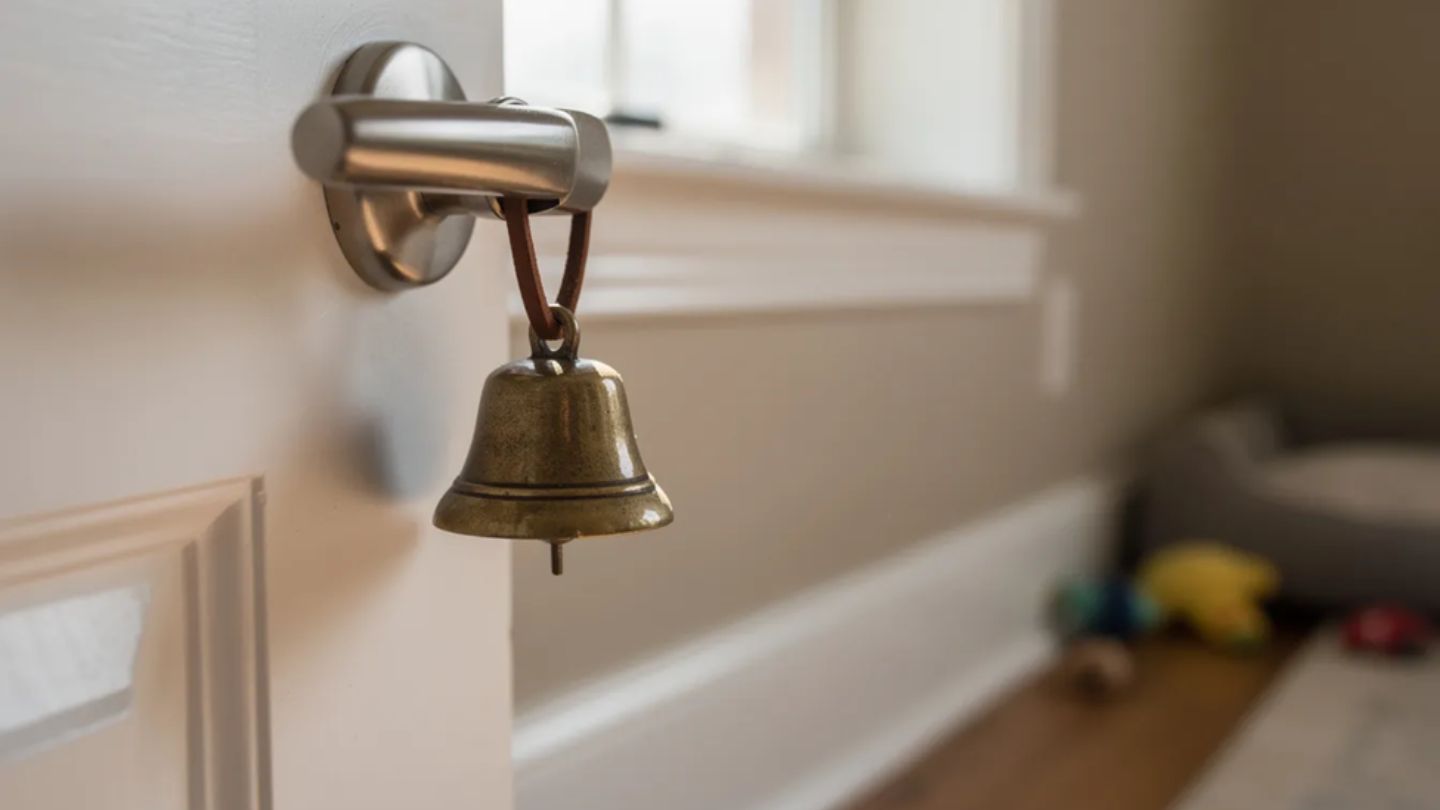
Early in your dog’s training, encourage the adoption of a clear signal. An effective signal clearly communicates your dog’s desire to go outside to urinate or defecate. Potential signals include sitting by you with a forlorn face, nuzzling your forearm, sitting by an exit door, barking once, or ringing a bell.
Rather than teach a specific behavior, encourage the adoption of what your dog does naturally. Therefore, ringing a bell is CPT’s least favorite from the preceding list. Moreover, CPT prefers communication methods occurring proximal to the owner, as they are more flexible and practical for all environments and situations.
Pay attention to what your dog does naturally when he/she needs to urinate outside. Then, respond promptly. Reinforcing the natural signal with an immediate trip outside will increase the likelihood of your dog purposefully performing the communication each time he/she desires an opportunity to urinate or defecate outdoors.
Housebreaking success requires consistency, structure, and patience. By understanding natural urination rhythms, maintaining a predictable schedule, supervising closely, and reinforcing correct behavior, dogs of all ages can develop reliable housebreaking habits. When accidents happen, calmly redirect and clean with an enzymatic product. A CPT custom housebreaking plan prevents accidents, strengthens communication, reduces stress, and expedites success.
Comprehensive Pet Therapy approaches housebreaking as part of a complete behavioral foundation that supports long-term success at home and beyond. A pet dog’s foundation includes obedience and socialization, which CPT addresses through structured group class programs, like Beginner Obedience, Intermediate Obedience, and Advanced Obedience. When dogs need physical outlets, dog agility training channels rambunctious energy into a productive direction, while concurrently improving obedience, confidence, athleticism, and the dog-owner relationship. For disabled clients, CPT’s service dog training program educates dogs to perform meaningful task behaviors that improve the client’s quality of life. For clients who prefer one-on-one instruction or who have issues not covered effectively in group class, especially household manners and behavioral issues, such as anxiety and aggression, private instruction, virtual instruction, and in-home private instruction achieve goal outcomes faster and with less frustration.
Yes. If your apartment is a high-rise, then you may wish to use an indoor or hybrid solution. Alternatively, maintain an outdoor solution, while using common area mulch or a nearby park in lieu of a backyard.
The excitement and movement of a walk may facilitate elimination activity. Also, some dogs don’t want to soil their outdoor territory. To remedy the issue, condition your dog that urinating and/or defecating in the yard is a prerequisite for a walk, where in addition to effusive praise the walk becomes part of the reward process.
With young puppies, assume it’s a urination need. Nevertheless, the answer lies with what historically happens after you release your dog. Does your dog immediately urinate? Or does your dog seek play, affection, or a toy?
Continue routine and schedules as much as possible. In addition, try to locate urination spots that have a surface and overall environment similar to your yard. For those using an indoor plan, bring the pad or tray on your trip, and then place the portable urinary location in a convenient location within your hotel room, cottage, or guest residence.
When resolving housebreaking issues, if you live in Atlanta, CPT typically recommends in-home private instruction with a CPT Staff Trainer or Head Trainer. Schedule a Staff Trainer for puppies or adult dogs with normal temperaments. Schedule a Head Trainer for anxious dogs, dogs with health problems, or dogs who have been difficult to housebreak.
If you reside outside the Atlanta-metro area, we recommend virtual private instruction with a CPT Staff Trainer or Head Trainer. Via virtual instruction, CPT has helped clients from throughout the USA and Canada.
CPT also has a location in Eugene, Oregon. Therefore, CPT can also provide in-home instruction within the Eugene-metro area.
To schedule an in-home or virtual appointment, please email CPT or contact the CPT office by phone (404-236-2150). When calling, please note CPT office hours are M – F from 9 am – 4 pm.


Need to get in touch with CPT? I’ve got you covered.
Pick what works best for you!