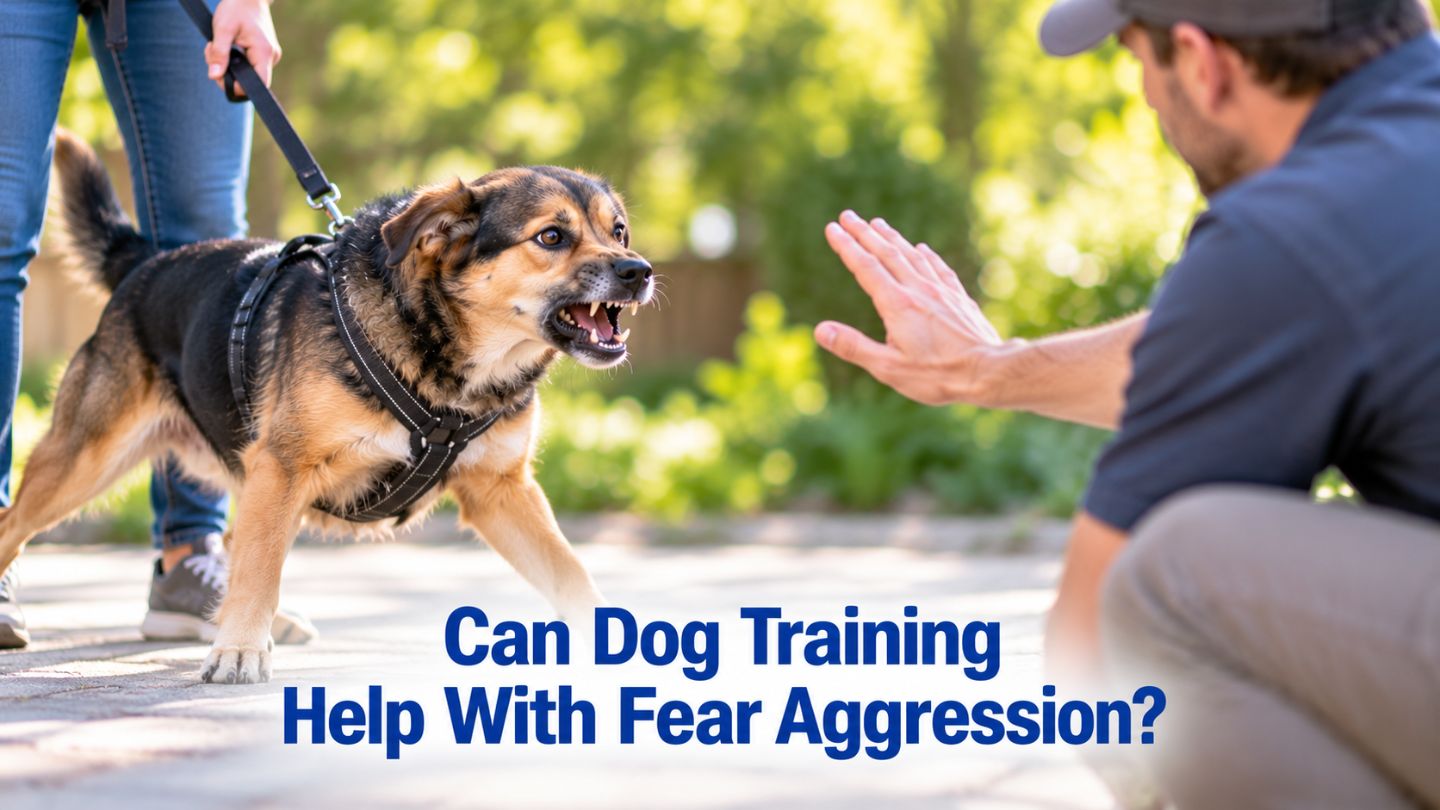
If your dog lunges at strangers on walks, growls when someone approaches the front door, or cowers and snaps when another dog gets too close, you already know how stressful and isolating fear aggression can feel. You may wonder whether your fur baby is simply “mean” or whether anything can actually be done. So, can dog training help with fear aggression? The answer is yes – when that training focuses on changing the dog’s emotional response to what frightens them, not just suppressing the symptoms.
Fear aggression is one of the most common behavioral challenges pet parents face, and it is also one of the most misunderstood. Many dog owners assume their aggressive dog is being defiant or dominant, when in reality, the dog feels threatened and is trying to protect itself. That distinction matters enormously because the right approach – reward-based behavior modification – can reshape how a dog experiences the world, while the wrong approach can make things far worse.
Fear aggression is defensive behavior a dog uses to make something scary go away. Unlike dominance aggression or territorial aggression, where a dog may be trying to control space or resources, a fear-aggressive dog is reacting because it perceives danger and believes it has no other option. Fear aggression occurs when dogs feel threatened, cornered, or unable to retreat. These dogs are not trying to “win” – most dogs would rather create distance and escape if they could.
The progression often looks like this: first, the dog shows subtle signs of discomfort. Then, if the dog feels trapped or the threat keeps approaching, the signals escalate to growling, lunging, or snapping. If those warnings are ignored or punished, the dog may skip straight to biting because the earlier communication was suppressed. Fearful dogs may exhibit defensive or offensive aggression depending on the context and how trapped they feel. A dog that cannot flee may exhibit offensive fear aggression, lunging forward to drive the threat away rather than waiting for it to arrive.
It is critical to distinguish fear-based aggression from excitement, frustration, or protective aggression. A frustrated dog pulling toward another dog at the end of a leash may look similar to a fear-aggressive dog, but the motivation – and therefore the training approach – is entirely different. Misdiagnosing the root cause leads to solutions that do not address the real problem and can make the dog’s behavior worse.
Consider a dog who snaps when a stranger reaches over his head. To an observer, that looks like an aggressive dog. But to the dog, a looming hand from an unfamiliar person is a perceived threat. His body was already signaling fear – ears turned back, weight shifted away, lip licking – long before the snap. Understanding this changes everything about how we respond.
Most dog owners only notice aggressive behavior once it has already escalated to something loud or frightening. But the early signals are almost always there first.
Subtle early warning signs include:
More obvious warning signs include:
Growling is information, not insubordination. A growl tells you the dog is uncomfortable and gives you the chance to intervene before things escalate. Punishing warning signals like growling can lead to unexpected aggressive behaviors because the dog learns to skip the warning entirely. Recognizing these early signs is what guides where and how training should begin.
Understanding why your dog reacts the way it does will not change the past, but it will help you approach the training process with more patience, empathy, and realistic expectations. Dogs’ fear aggression rarely comes from a single cause – it is almost always a combination of factors working together.
Genetics and temperament. Genetic predisposition may increase fear responses in dogs. Some breeds and individual dogs are temperamentally more reactive, more easily startled, or slower to recover from stressful events. This is not a life sentence, but it does mean some dogs need more structured support to learn to remain calm.
Early socialization gaps. Inadequate socialization can lead to fear aggression in dogs. Puppies who were not gently exposed to a variety of people, animals, sounds, and environments during their critical developmental period are more likely to find new experiences frightening later in life. Early socialization can prevent fear aggression in puppies, which is why that early window matters so much.
Traumatic experiences. Traumatic experiences can trigger fear aggression in dogs. A dog who was attacked by another dog, handled roughly, or exposed to an overwhelming environment may form lasting negative associations with similar situations. Prior negative experiences create deep emotional memories that shape how the dog interprets future encounters.
Pain and medical conditions. Pain or medical conditions can cause aggressive behavior in dogs. A dog dealing with undiagnosed joint pain, dental issues, or sensory decline may react aggressively to handling that hurts, even if it was previously well tolerated. Consulting a veterinarian can help rule out medical causes of aggression in dogs before assuming the issue is purely behavioral.
Common stimuli that trigger fear include:
Dogs may react aggressively to perceived threats in confined spaces where they cannot create distance. Some triggers are highly specific – one dog may be perfectly calm around adult men but terrified of children, while another may only react to dogs that stare.
Starting a simple “trigger diary” – noting what was happening, who was present, how close the trigger was, and what the dog did – helps identify patterns and gives any professional you work with a head start on understanding your dog’s behavior.

Dog training can dramatically improve fear aggression when it is evidence-based, individually tailored, and focused on changing how the dog feels – not just what the dog does. Dog training can help with fear aggression through behavior modification that targets the emotional response driving the behavior, not merely the outward symptoms.
This is an important distinction. Obedience training alone – teaching “sit,” “stay,” or “down” – does not address why the dog feels scared. A dog who sits on command but is still terrified will eventually break that sit when fear overwhelms them. Effective training reshapes the dog’s emotional response so that situations which once triggered a fear-based aggressive reaction begin to feel neutral or even positive. The dog learns that scary things predict good outcomes, and over time, the need for aggression fades.
Reliable behavior change works because of how dogs learn: they repeat behaviors that feel safe and rewarding and move away from those that feel dangerous. When a training plan consistently pairs triggers with positive experiences, the dog’s brain gradually recalibrates. Positive reinforcement training builds a dog’s confidence and resilience, giving the dog emotional tools to cope rather than react.
An effective plan operates on three layers. First, safety management prevents the dog from practicing aggressive behavior while training takes effect. Second, skills training gives the dog alternative behaviors to use instead of aggression. Third, emotional change through desensitization and counterconditioning shifts the underlying feeling driving the aggression. When all three layers work together, the results can be substantial and lasting.
Even dogs with longstanding fear can improve significantly given consistent, structured work. Fear aggression management often requires time and consistency for improvement, but progress is absolutely achievable – even when the dog has been fearful for years.
The main tools trainers use to address dogs’ fear aggression fall into three categories: management, skills training, and emotional modification. Each plays a distinct role, and the most effective training programs integrate all three. These strategies should always be adapted to the individual dog and implemented at a pace where the dog can stay below its fear threshold.
Management means controlling environments to prevent dogs from confronting fear triggers while training takes effect. It is the foundation of any responsible plan for an aggressive dog because it stops the cycle of fear and rehearsal. Every time a dog practices aggressive behavior, that neural pathway gets stronger. Management breaks the cycle.
Practical management includes choosing quieter walking routes, walking at low-traffic times, using visual barriers like fences or furniture when guests arrive, and keeping the dog in a comfortable, safe space during potentially stressful events. Avoiding known triggers when possible is not avoidance – it is strategy.
Safety gear is part of responsible management. A well-fitted harness and leash give you control without discomfort. Basket muzzles, when introduced through positive reinforcement training, are an excellent safety tool that many dogs learn to wear comfortably. A muzzle does not mean your dog is “dangerous” – it means you are a thoughtful, responsible owner protecting everyone while the training process unfolds.
Management is not giving up. It is a crucial part of an effective training plan that protects people, other animals, and the dog itself.
A reactive dog cannot lunge and perform a calm behavior at the same time. Teaching clear alternative behaviors gives the dog something constructive to do when it encounters a trigger. Redirecting a dog’s focus can help calm aggressive behavior by replacing panic with a practiced, rewarding action.
Useful skills to teach include:
These behaviors should be heavily rewarded with positive reinforcement so they become the dog’s default response. Practice them daily in low-distraction environments first. When the desired behavior is strong and automatic in easy settings, it can be gradually introduced near real-life triggers. Rushing this step is one of the most common mistakes dog owners make.
Here is what this looks like in practice. Imagine a dog that barks and lunges at other dogs during walks. The training plan would unfold something like this:
Find the comfortable distance – the point where the dog sees another dog but can still remain calm without showing fear signals. This might be across a large field or parking lot. At that distance, every time the dog notices the other dog, deliver high-value treats. The goal is simple: when the dog sees the trigger, good things happen.
A basic process looks like this:
Avoid flooding by preventing dogs from being overwhelmed by high-intensity fear triggers. If you push too close too fast, the dog’s fear spikes and the session does more harm than good. Progress is measured in small, steady steps – not dramatic leaps.
These methods are most effective when guided by a qualified professional, especially for dogs with a history of biting. A professional dog trainer can read the dog’s body language in real time and adjust the plan moment by moment, which is difficult for most owners to do alone.
While seeking professional guidance, there are meaningful steps you can put into practice right now to begin helping your anxious dog. When reactions are tied to familiar routines, in-home dog training can create a personalized learning experience by accounting for the dog’s everyday surroundings.
Observe and record. Start watching your dog more closely. Write down what triggers reactions, what the early warning signs look like, and which environments your dog feels safest in. Identifying specific triggers of fear aggression can enhance personalized training approaches when you do work with a trainer. This information is invaluable.
Stop punishing fear signals. If your dog growls, do not yell or correct. Punishment-based methods can worsen fear aggression in dogs. Instead, calmly and quietly move the dog away from the situation. The growl is telling you something important – listen.
Build trust with simple games. Short, positive training sessions at home – like nose targeting, hand following, or treat searches – build confidence and strengthen your relationship. Positive reinforcement training helps reduce fear and aggression by giving the dog experiences where it feels successful and safe. Keep sessions brief and always end on a calm, positive note.
Manage the environment now. Begin managing triggers now by following the safety steps above. Reducing overwhelming encounters can prevent further rehearsal while you seek guidance.
Well-meaning pet parents often do things that accidentally make fear aggression worse. Being aware of these pitfalls can prevent setbacks. A safety-first approach is also central to tips for training an aggressive dog effectively, including gradual exposure and avoiding forced encounters.
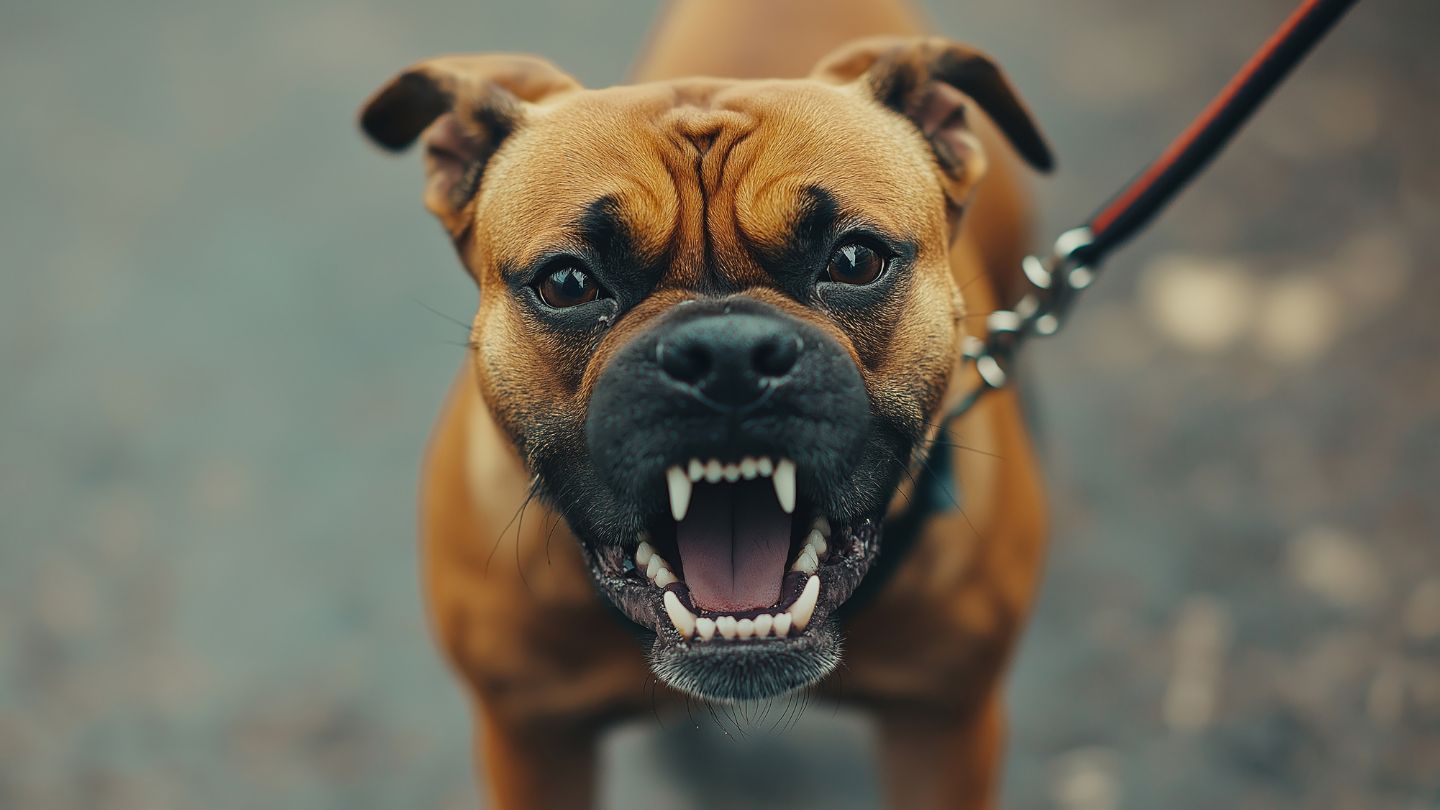
Fear aggression is a safety issue, and professional help is crucial for managing fear aggression in dogs. While the steps above are a strong starting point, most dogs with fear aggression benefit enormously from expert guidance. Professional guidance is crucial in addressing fear aggression effectively because the nuances of timing, body-language reading, and plan adjustment are difficult to master without experience.
Signs that you should reach out for professional support include:
A thorough behavior assessment – including the dog’s fear history, known triggers, early warning signals, and medical status – allows a professional to build a customized plan. Veterinary behaviorists can diagnose and treat fear aggression with a depth of knowledge that includes both behavioral science and medical expertise. If your dog’s aggression appeared suddenly or is accompanied by other changes in behavior, a veterinary evaluation is essential to rule out pain, hormonal imbalance, or neurological issues.
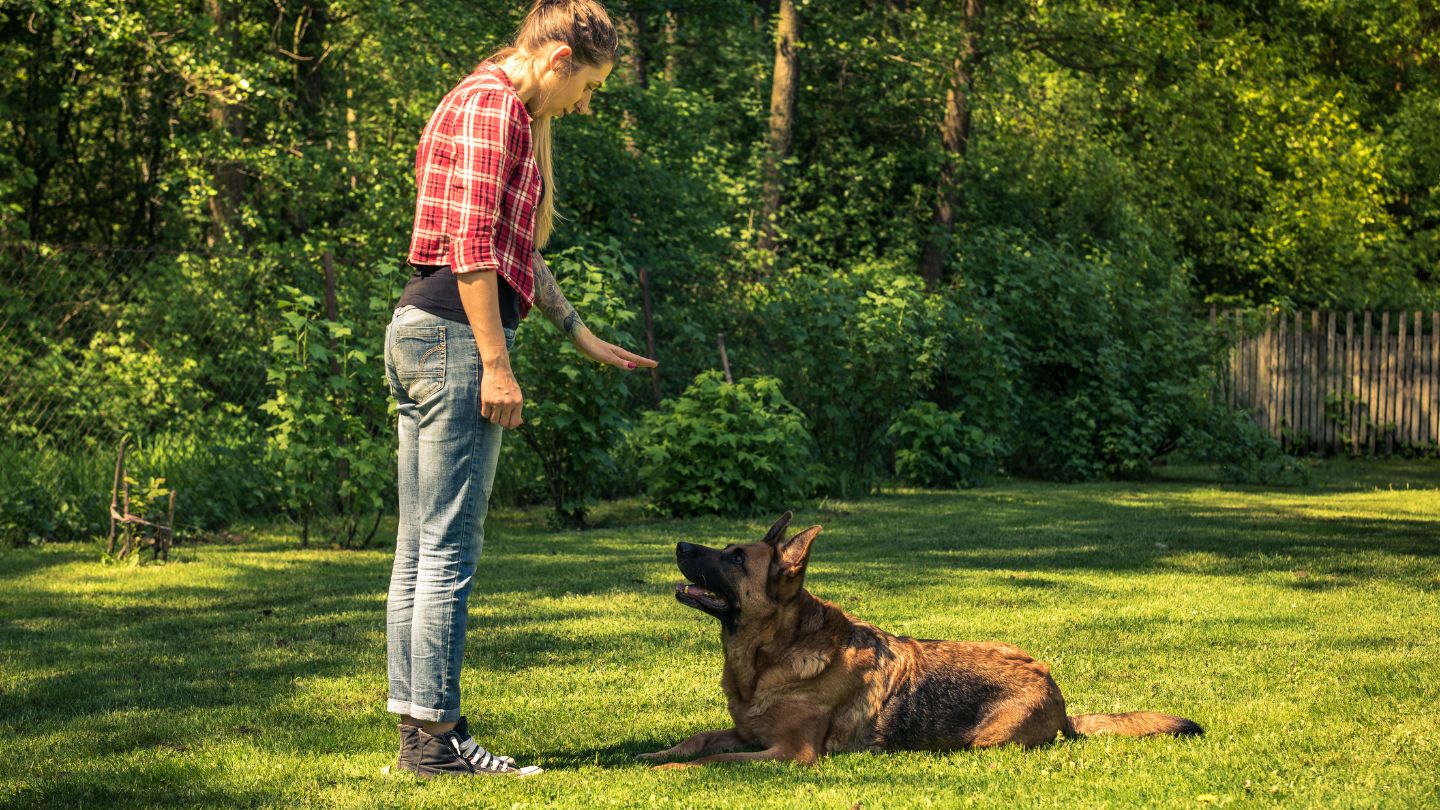
Fear aggression can make ordinary walks, visits, and introductions stressful, but a dog’s reactions can improve with a thoughtful plan. Understanding triggers, creating safe distance, and using gradual, reward-based training can help build confidence over time. Progress looks different for every dog, so the goal is steady improvement and safer daily routines.
Comprehensive Pet Therapy (CPT) works with dogs and owners through individualized in-home private instruction, while younger dogs can build early skills in a puppy class. For specialized goals, CPT also provides service dog training. Families seeking targeted support can learn about aggressive dog training in Atlanta. Contact us to discuss a suitable next step for your dog.
There is no single outcome for every dog. Some become comfortable in situations that once upset them, while others continue to need support around certain triggers. A useful measure of progress is whether your dog can handle daily routines more safely and with less distress.
Look at the situation before the reaction: what was nearby, how close it was, and whether your dog tried to move away. A pattern of reactions in specific situations can suggest fear, but a qualified professional can help assess the cause.
It means you should take safety seriously, particularly if your dog has bitten, snapped, or is becoming harder to manage. It does not determine how your dog will behave in every situation. Keep people and animals at a safe distance while you seek guidance.
You can keep notes about reactions and make thoughtful changes to your dog’s routine. More involved behavior work can be difficult to judge on your own, especially when there is a bite history. A trainer can help tailor the steps to your dog.
That depends on your dog and the situations involved. Progress may mean calmly passing people or dogs at a distance, rather than greeting them. Follow your dog’s comfort level and work with a professional to set goals that support safety and wellbeing.
Punishing these reactions can make it harder to recognize when your dog is uncomfortable. If your dog growls or snaps, calmly create distance and avoid forcing an interaction. Then consider what triggered the response and discuss a safe plan with a qualified professional.

Need to get in touch with CPT? I’ve got you covered.
Pick what works best for you!


