Ever wondered what really goes on behind the doors of professional dog training classes? You’re not alone. Most dog owners sign up hoping for results, but aren’t quite sure what to expect from that first session. Understanding what happens inside dog training classes in Atlanta programs removes the mystery and helps you prepare for success.
An evidence-based approach that combines decades of research with hands-on expertise helps create structured and effective training experiences. Whether bringing a young puppy for socialization or working with an older dog needing behavior modification, understanding the process ensures both the dog and owner gain the most from every session.
This blog walks you through the complete training experience, from your first warm-up exercise to advanced real-world situations, so you’ll understand exactly how professional trainers build lasting obedience and stronger dog-owner relationships.
Professional dog training isn’t chaotic play time. It’s a carefully designed 60-90 minute experience built around learning objectives, practice repetitions, and measurable outcomes, reflecting the best length for dog training sessions.
Sessions typically begin with an assessment. Certified trainers observe your dog’s energy level, focus, and overall demeanor. Is your pup shy around other dogs? Highly food-motivated? Easily distracted by sounds? This initial read shapes how trainers approach each exercise, even in group training classes.
The warm-up phase focuses attention. Simple commands like “sit” or name recognition help dogs shift from excited arrival mode into learning mode. This transition matters; a dog who’s still mentally in the parking lot won’t absorb complex training.
Core training time fills the middle portion. This is where the real work happens. Dogs practice specific commands while owners receive real-time coaching on timing, body language, and reward delivery. Trainers demonstrate techniques, then watch as you implement them, offering corrections and encouragement throughout.
Cool-down periods often include controlled socialization or calm settling exercises. This helps dogs generalize relaxation skills and end sessions on a positive note rather than in a state of high arousal.
Between sessions, homework bridges the gap. Expect to practice 3-4 short daily sessions of 5-10 minutes each, which aligns with understanding puppy training to stop biting and reinforcing consistent behavior.

A balanced training philosophy combines positive reinforcement with appropriate structure, building confidence and impulse control simultaneously.
Positive reinforcement forms the foundation. High-value treats, praise, and play reward desired behaviors the moment they occur. Timing matters enormously here. A reward delivered within milliseconds of correct behavior creates strong neural pathways. A delayed reward creates confusion.
But professional trainers understand that positive reinforcement alone doesn’t address every situation, especially when working through behaviors addressed in aggressive dog training tips. Balanced training incorporates structure, boundaries, and clear communication so dogs understand both what earns rewards and what expectations exist in various contexts.
Tools and equipment support learning without causing stress. Clickers mark precise moments of correct behavior. Comfortable harnesses and leashes provide control without discomfort. As dogs progress, trainers introduce nonverbal cues to reduce treat dependence and build reliability.
Adaptation is constant. A young puppy with a ten-minute attention span requires different pacing than an older dog working through separation anxiety. Breed characteristics, individual temperament, and specific training goals all influence how experienced trainers adjust their methods from session to session.
Wondering what specific skills your dog will actually practice? Here’s what fills those training hours.
Even dedicated dog owners make errors that slow progress. Recognizing these patterns helps you avoid them.
Professional dog training programs in Atlanta follow deliberate timelines. Most basic obedience courses span 4-8 weeks. Each week introduces new complexity. Early sessions focus on behavior formation in low-distraction environments, quiet indoor spaces, or controlled outdoor areas. By week three or four, trainers introduce challenges: other dogs closer by, movement in peripheral vision, unfamiliar sounds.
Milestone assessments track readiness for advancement. Trainers evaluate whether dogs respond reliably to commands under various conditions before moving to higher difficulty levels. If progress stalls, additional practice or private lessons may be recommended rather than pushing forward prematurely.
Real-world transition happens gradually. After mastering skills in controlled settings, dogs practice in public locations, parks, neighborhood sidewalks, and pet-friendly stores. Some metro Atlanta programs rotate class locations specifically to build adaptability.
Advanced training builds on solid foundations. Competition obedience, off-leash reliability, specialized service dog training, and therapy dog certification programs require strong basic commands before introducing advanced skills. This progression also highlights the benefits of dog agility training as dogs progress into more advanced and engaging activities.
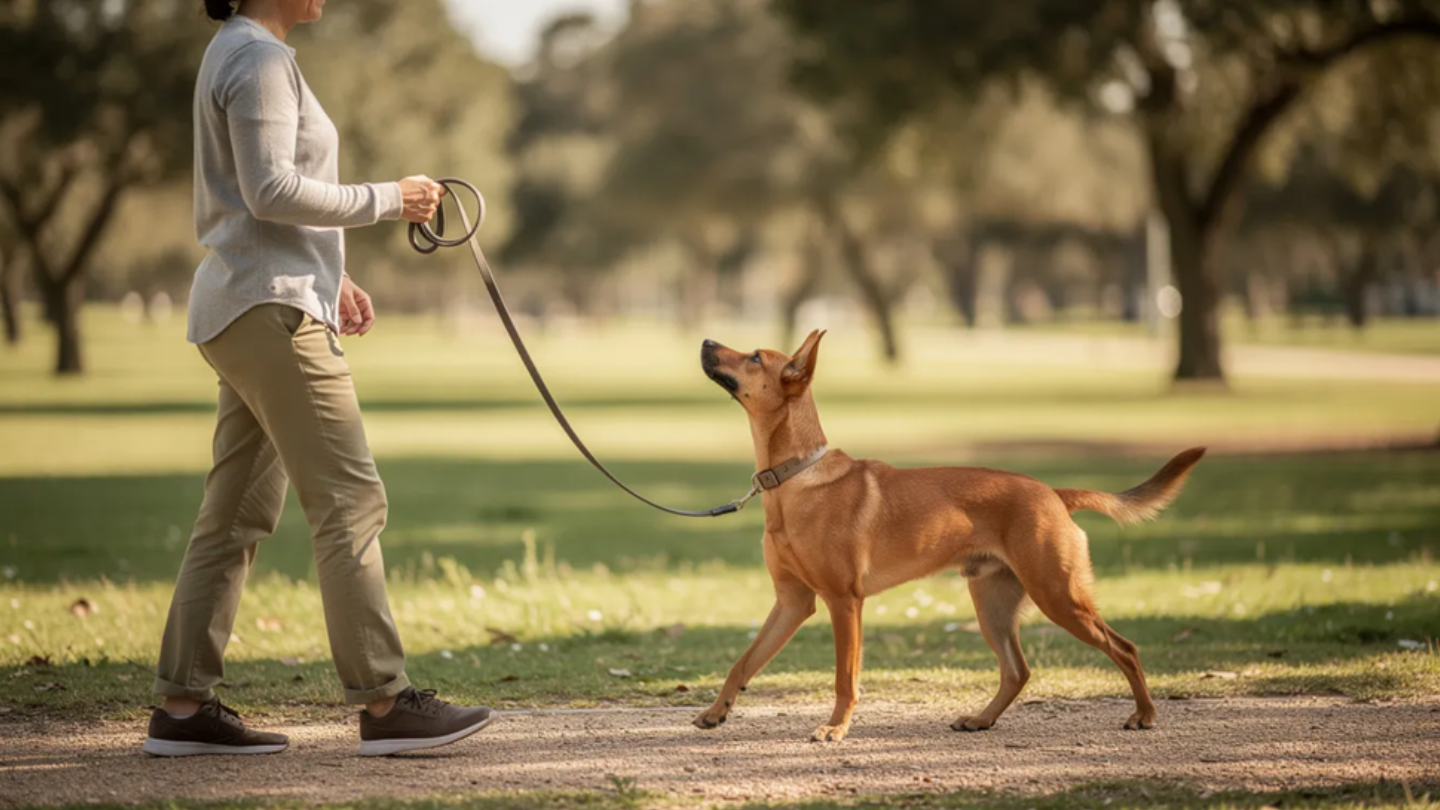
Service dog training involves precise task training and public access preparation. Sessions focus on reliable behavior in complex environments, consistent response regardless of distractions, and specific assistance tasks. Certification requirements are rigorous; dogs must demonstrate exceptional self-control and handler responsiveness.
Behavior modification addresses serious behavioral issues like aggression, fear, and severe separation anxiety. These protocols begin with comprehensive assessments, sometimes 90-120 minutes, exploring triggers, history, and health factors. Desensitization, counter-conditioning, and alternative behavior training form the therapeutic foundation. Private training sessions often prove most effective for these cases.
Puppy socialization classes capitalize on critical developmental windows. Activities include exposure to varied surfaces, sounds, and people alongside an age-appropriate obedience introduction. Bite inhibition, crate training, and housebreaking guidance help families navigate those chaotic first months with a young puppy.
Therapy dog preparation builds the temperament and reliability required for facility visits. Public access training, calm behavior around medical equipment, and consistent responses to unpredictable patient interactions prepare dogs for certification testing.
Here’s something many people don’t realize: professional trainers spend as much time teaching owners as they do teaching dogs. Your education runs parallel to your dog’s throughout every program.
Reading canine body language becomes second nature with practice. Trainers teach you to recognize stress signals, lip licking, yawning, whale eye, before they escalate into reactive behavior. You’ll learn to spot when your dog is mentally checked out versus engaged and ready to learn.
Hands-on coaching during exercises corrects your technique in real time. Where are your hands positioned? What’s your body angle communicating? Are you inadvertently telegraphing anxiety? Professional trainers see these subtle cues and help you adjust.
Take-home materials support continued learning. Written handouts, behavior logs, and video resources help you remember correct techniques between sessions. For complex behavioral issues, detailed written plans provide step-by-step guidance.
Dog training programs offer a structured environment where dogs learn obedience, socialization, and essential behavioral skills through guided exercises and positive reinforcement. From basic commands to advanced techniques, these classes help build stronger bonds between pets and owners while ensuring dogs become confident, well-mannered companions in everyday situations.
At Comprehensive Pet Therapy, we provide dog training classes in Atlanta that are designed to support every stage of your dog’s development with expert-led, personalized approaches. From growl class, puppy class, service dog training, to dog agility training, we provide well-rounded programs tailored to your pet’s needs. Get started with us today and take the next step toward a happier, better-trained dog.
Most group training classes run approximately 60 minutes, while private training sessions may extend to 90 minutes depending on complexity. This time includes warm-up, core training exercises, real-time feedback, and cool-down activities. The structured format maximizes learning while respecting canine attention spans.
Professional trainers expect variability; dogs have off days just like people. Experienced trainers adapt techniques immediately, adjusting reward value, reducing distractions, or breaking exercises into smaller steps. Persistent challenges may prompt recommendations for private lessons where individualized attention addresses specific obstacles.
Many dog training facilities in Atlanta welcome prospective clients to observe a class before committing. Watching a live session provides valuable insight into the training environment, instructor style, and how dogs respond to the exercises. Observers can see firsthand how trainers manage group dynamics, handle distractions, and communicate with both dogs and owners. This transparency helps build trust and confidence in the training company’s methods.
Class sizes are intentionally limited, typically 4-6 puppies or 7-8 adult dogs, to maintain individual attention. Trainers structure exercises so dogs work at appropriate challenge levels, sometimes using breakout work or distance management. Placement in appropriately leveled classes ensures dogs aren’t overwhelmed or under-stimulated.
The qualifications of Atlanta dog trainers reflect a commitment to professionalism, continuous learning, and compassionate, evidence-based approaches that benefit both dogs and their owners.

Need to get in touch with CPT? I’ve got you covered.
Pick what works best for you!